Gold

Gold
Buy at up to 20% discount from Amazon

Pages

White Arbitrators Exhibit “Unconscious Bias” Towards Black Defendants?

Jay-Z's $200-million clothing battle could be game changer for black lawyers the world over

Gbenga Oduntan, University of Kent
Millionaire rapper Shawn Carter, aka Jay-Z, has proved yet again why he is larger than life. He is embroiled in a contractual dispute over the US$204m (£159m) sale of his clothing brand to Iconix Brand Group a decade ago.

In a twist that has now thrown the world of arbitration into a frenzy, Jay-Z recently won a temporary decision from a New York court to halt the process on the grounds there aren’t enough black arbitrators to settle it fairly within the terms of the contract. If this argument ultimately carries the day, it will require a severe reorganisation and opening up of the arbitration profession, one of the most cliquish corners of the legal business – and not just in America, but around the world.
Like many business contracts, the original Jay-Z/Iconix deal agreed that any disputes would be settled by a commercial arbitration process. The contract stipulated that the parties would use arbitrators provided by the American Arbitration Association (AAA).
But as part of a dispute over intellectual property rights, Jay-Z’s lawyers are arguing that the arbitration clause is invalid because they could not “identify a single African-American arbitrator on the ‘Large and Complex Cases’ roster” provided by the association. Even when the AAA went through its expanded list of 200 potential arbitrators, it could only identify three African-Americans – one of whom was ineligible to come on board because they work for the law firm representing Iconix.
Jay-Z’s lawyers argued before the New York Supreme Court that white arbitrators exhibit “unconscious bias” towards black defendants; and that the AAA’s lack of racial diversity consequently “deprives litigants of colour of a meaningful opportunity to have their claims heard by a panel of arbitrators reflecting their backgrounds and life experience”. The procedure, they went on, “deprives black litigants … of the equal protection of the laws, equal access to public accommodations, and mislead consumers into believing that they will receive a fair and impartial adjudication”.
The New York Supreme Court’s decision to grant a stay on the back of these arguments is unprecedented and will become legendary within the profession. And unlike traditional courts, where judges are usually only bound to follow decisions within the same jurisdiction, arbitration is essentially one global system. If New York decides that these are the rules, the effects will be felt around the world.

The exclusion problem

What the case has highlighted is that arbitrators in the US, but also in most Western societies, are disproportionately white, male and aged. The same is true of courts, but more is arguably expected from arbitrators as the field of recruitment is wider – with less emphasis on legal training and professional qualifications.
This situation is hardly surprising given that big law firms are the incubation beds for commercial arbitrators. The chances of being appointed by businesses to settle highly complex matters like Jay-Z’s case increase exponentially if the arbitrator works in the so-called golden circle of law firms, and this is where the shortage begins.


Not what enough lawyers look like. BCFC

Don’t tell anyone this, but the law firm representing Jay-Z, Quinn Emanuel, itself has a big diversity deficit at partner level, with only three African-American partners listed in a list of almost 300. Even if the firm were allowed to supply black arbitrators to handle Jay-Z’s case itself, it wouldn’t be able to. If black partners are this scarce, you might as well look for black unicorns to fill arbitration panels.
The shortage is just as problematic in complex international arbitrations. In 2013, around a third of the parties to the International Chamber of Commerce Court of Arbitration were from Africa, Asia and the Pacific. Since then, just 15% of appointees were from those regions. Meanwhile, appointments of African arbitrators at the Permanent Court of Arbitration and black judges at the World Court are proportionately very low.
There are few renowned non-white arbitrators in international petroleum negotiation – despite the fact that nearly 60% of petroleum is produced outside Europe and North America. There are even fewer developing-world experts in international boundary disputes. Arguably developing countries are constantly shortchanged in international justice as a result.

What to do

How do we address this issues? We could throw the burden back on the likes of Jay-Z by saying he should have fought for diversity in arbitrators at the drafting stage of his sales contract. That may well be what the court ultimately does in his case, but what then?
It is generally accepted that contractual specifications about arbitration cannot violate national laws. These would include race discrimination laws, though the limits of this were shown in a relatively recent UK judgement, Jivraj v Hashwani (2011). Here, the contract stipulated that arbitrators had to be respected Muslim members of the Ismaili community. When challenged as racial discrimination, the Supreme Court decided that the relevant UK laws only applied to employees and not to arbitrators because they were not employees.
But if that left the likes of Jay-Z free to push for African-American arbitrators as part of business contracts, there is still the problem of a general dearth of them. If he does ultimately lose his case in New York, it will still have highlighted this gap in the market. Perhaps in future, black dealmakers will insist on any arbitration taking place somewhere with more black arbitrators.
The bottom line is that we need recruitment programmes to encourage black arbitrators now, and to recognise that those in place should be more frequently offered for appointments so that they are experienced enough to handle large complex cases. And to fix the current shortage, we also have to address the diversity issues in the legal profession as a whole.
Too often at present, we’re kidding ourselves. The American Arbitration Association has a programme to mentor diverse young arbitrators, and promises lists of arbitrators of at least 20% diversity, for example. But it is only able to offer this proportion by lumping together all diversity including gender, age and ethnic background – and 20% is hardly a great achievement anyway. If demand for more black representation rises and centres for arbitration like New York and London don’t offer enough people, new rivals may well step up to the plate.The Conversation
Gbenga Oduntan, Reader (Associate Professor) in International Commercial Law, University of Kent
This article is republished from The Conversation under a Creative Commons license. Read the original article.


Diseases through the decades

Diseases through the decades – here's what to look out for in your 40s, 60s, 80s and beyond


File 20181218 27767 hj5zbd.jpg?ixlib=rb 1.1
You’re another year older but that doesn’t have to mean poorer health. Lorene Farrugia
Stephanie Harrison, South Australian Health & Medical Research Institute; Azmeraw T. Amare, South Australian Health & Medical Research Institute; Jyoti Khadka, South Australian Health & Medical Research Institute; Maria Carolina Inacio, South Australian Health & Medical Research Institute; Sarah Bray, South Australian Health & Medical Research Institute, and Tiffany Gill, University of Adelaide
Many diseases develop and become more likely as we age. Here are some of the most common conditions, and how you can reduce your risk of getting them as you clock over into a new decade.

In your 40s

Maintaining a healthy weight can reduce the risk of developing arthritis, coronary heart disease, and other common and related conditions, including back pain, type 2 diabetes, stroke, and many cancers. But almost one-third of Australians in their 40s are obese and one in five already have arthritis.

Read more: Arthritis isn't just a condition affecting older people, it likely starts much earlier

From the age of 45 (or 35 for Aboriginal and Torres Strait Islanders), heart health checks are recommended to assess risk factors and initiate a plan to improve the health of your heart. This may include changing your diet, reducing your alcohol intake, increasing your physical activity, and improving your well-being.
Checks to identify your risk of type 2 diabetes are also recommended every three years from age 40 (or from age 18 for Aboriginal and Torres Strait Islanders).
If you don’t already have symptoms of arthritis or if they’re mild, this decade is your chance to reduce your risk of the disease progressing. Focus on the manageable factors, like shedding excess weight, but also on improving muscle strength. This may also help to prevent or delay sarcopenia, which is the decline of skeletal muscle tissue with ageing, and back pain.


Achieving and maintaining a healthy weight will set you up for decades of better health. Sue Zeng

Most people will begin to experience age-related vision decline in their 40s, with difficulty seeing up close and trouble adjusting to lighting and glare. A baseline eye check is recommended at age 40.

Read more: Earn bitcoin hourly from Freebitco

In your 50s

In your 50s, major eye diseases become more common. Among Australians aged 55 and above, age-related macular degeneration, cataracts, diabetes-related eye diseases and glaucoma account for more than 80% of vision loss.
A series of health screenings are recommended when people turn 50. These preventive measures can help with the early detection of serious conditions and optimising your treatment choices and prognosis. Comprehensive eye assessments are recommended every one to two years to ensure warning signs are detected and vision can be saved.
National cancer screening programs for Australians aged 50 to 74, are available every two years for bowel and breast cancer.

Read more: Women should be told about their breast density when they have a mammogram

To screen for bowel cancer, older Australians are sent a test in the post they can do at home. If the test is positive, the person is then usually sent for a colonoscopy, a procedure in which a camera and light look for abnormalities of the bowel.
In 2016, 8% of people screened had a positive test result. Of those who underwent a colonoscopy, 1 in 26 were diagnosed with confirmed or suspected bowel cancer and one in nine were diagnosed with adenomas. These are potential precursors to bowel cancer which can be removed to reduce your future risk.
To check for breast cancer, women are encouraged to participate in the national mammogram screening program. More than half (59%) of all breast cancers detected through the program are small (less than or equal to 15mm) and are easier to treat (and have better survival rates) than more advanced cancers.

In your 60s

Coronary heart disease, chronic obstructive pulmonary disease (a disease of the lungs that makes breathing difficult), and lung cancer carry the biggest disease burden for people in their 60s.
If you’re a smoker, quitting is the best way to improve both your lung and heart health. Using evidence-based methods to quit with advice from a health professional or support service will greatly improve your chances of success.


Quitting smoking is the best way to improve your health. Ian Schneider

The build-up of plaques in artery walls by fats, cholesterol and other substances (atherosclerosis) can happen from a younger age. But the hardening of these plaques and narrowing of arteries, which greatly increases the risk of heart disease and stroke, is most likely to occur from age 65 and above.
Exercise protects against atherosclerosis and research consistently shows any physical activity is better than nothing when it comes to heart health. If you’re not currently active, gradually build up to the recommended 30 minutes of moderate-intensity exercise on most, preferably all, days.

Read more: Too much salt and sugar and not enough exercise – why Australians' health is lagging

Other potentially modifiable risk factors for stroke include high blood pressure, a high-fat diet, alcohol consumption, and smoking.
Your 60s is also a common decade for surgeries, including joint replacements and cataract surgery. Joint replacements are typically very successful, but are not an appropriate solution for everyone and are not without risks. After a joint replacement, you’ll benefit from physiotherapy, exercise, and maintaining a healthy weight.
The treatment for cataracts is to surgically remove the cloudy lens. Cataract surgery is the most common elective surgery worldwide, with very low complication rates, and provides immediate restoration of lost vision.

In your 70s

Many of the conditions mentioned above are still common in this decade. It’s also a good time to consider your risk of falls. Four in ten people in their 70s will have a fall and it can lead to a cascade of fractures, hospitalisations, disability and injury.
Osteoporosis is one cause of falls. It occurs most commonly in post-menopausal women but almost one-quarter of people with osteoporosis are men. Osteoporosis is often known as a silent disease because there are usually no symptoms until a fracture occurs. Exercise and diet, including calcium and vitamin D, are important for bone health.


Exercise and diet can improve bone health. Geneva, Switzerland

Older people are also vulnerable to mental health conditions because of a combination of reduced cognitive function, limitations in physical health, social isolation, loneliness, reduced independence, frailty, reduced mobility, disability, and living conditions.

In your 80s and beyond

Dementia is the second most common chronic condition for Australians in their 80s, after coronary heart disease – and it’s the most common for people aged 95 and above.
Many people think dementia is a normal part of the ageing process, but around one-third of cases of dementia could be prevented by reducing risk factors such as high blood pressure and obesity at mid-life.

Read more: Why people with dementia don't all behave the same

Early diagnosis is important to effectively plan and initiate appropriate treatment options which help people live well with dementia. But dementia remains underdiagnosed.
Around 70% of Australians aged 85 and above have five or more chronic diseases and take multiple medications to manage these conditions. Effective medication management is critical for people living with multiple conditions because medications for one condition may exacerbate the symptoms of a different coexisting condition.The Conversation
Stephanie Harrison, Research fellow, South Australian Health & Medical Research Institute; Azmeraw T. Amare, Postdoc researcher, South Australian Health & Medical Research Institute; Jyoti Khadka, Research Fellow, South Australian Health & Medical Research Institute; Maria Carolina Inacio, Director, Registry of Older South Australians, South Australian Health & Medical Research Institute; Sarah Bray, Registry of Older South Australians (ROSA) - Project Manager & Consumer Engagement Officer, South Australian Health & Medical Research Institute, and Tiffany Gill, Senior Research Fellow, University of Adelaide
This article is republished from The Conversation under a Creative Commons license. Read the original article.

Appearance and Health

Just because you're thin, doesn't mean you're healthy


File 20180921 129844 1a475xd.jpg?ixlib=rb 1.1
Being thin doesn’t mean you can eat unhealthy foods and get away with it. from www.shutterstock.com
Dominic Tran, University of Sydney
According to the Australian Institute of Health and Welfare, 63% of Australian adults are overweight or obese.
But it’s much harder to estimate how many are within a healthy weight range but have poor diets or sedentary lifestyles. These can cause significant health problems that will often be missed because the person appears to look “healthy”.

Read more: I'm not overweight, so why do I need to eat healthy foods?

How do we judge the health of weight?

Obesity statistics often take estimates of body fat using body mass index (BMI). Although BMI isn’t perfectly correlated with body fat percentage, it’s a quick and easy method for collecting data using just the person’s height and weight. If the BMI is higher than 25, a person is considered “overweight”. If it’s above 30, they’re considered “obese”. But BMI doesn’t tell us how healthy someone is on the inside.
Using additional lifestyle measures, such as diet and exercise frequency over the last year, a recent report from the Queensland Health department estimated 23% of those who are not currently overweight or obese are at risk of being so in the future.
These figures indicate that the percentage of unhealthy-weight individuals does not accurately capture the percentage of unhealthy-lifestyle individuals, with the latter number likely to be much higher.

Read more: We asked five experts: is BMI a good way to tell if my weight is healthy?

If you’re not overweight, does a healthy lifestyle matter?

Many people think if they’re able to stay lean while eating poorly and not exercising, then that’s OK. But though you might appear healthy on the outside, you could have the same health concerns as overweight and obese individuals on the inside.
When considering risk factors associated with heart disease and stroke or cancer, we often think about health indicators such as smoking, cholesterol, blood pressure, and body weight. But poor diet and physical inactivity also each increase the risk for heart disease and have a role to play in the development of some cancers.
So even if you don’t smoke and you’re not overweight, being inactive and eating badly increases your risk of developing heart disease.
Little research has been done to compare the risk diet and exercise contributes to the development of heart disease in overweight versus skinny but unhealthy individuals. However, one study measured the risk of different lifestyle factors associated with complications following acute coronary syndrome – a sudden reduction in blood flow to the heart.
It found adherence to a healthy diet and exercise regime halved the risk of having a major complication (such as stroke or death) in the six months following the initial incident compared with non-adherence.

Unhealthy diets are bad for your body, but what about your brain?

Recent research has also shown overconsumption of high-fat and high-sugar foods may have negative effects on your brain, causing learning and memory deficits. Studies have found obesity is associated with impairments in cognitive functioning, as assessed by a range of learning and memory tests, such as the ability to remember a list of words previously presented some minutes or hours earlier.
Notably, this relationship between body weight and cognitive functioning was present even after controlling for a range of factors including education level and existing medical conditions.
Of particular relevance to this discussion is the growing body of evidence that diet-induced cognitive impairments can emerge rapidly — within weeks or even days. For example, a study conducted at Oxford University found healthy adults assigned to a high-fat diet (75% of energy intake) for five days showed impaired attention, memory, and mood compared to a low-fat diet control group.
Another study conducted at Macquarie University also found eating a high-fat and high-sugar breakfast each day for as little as four days resulted in learning and memory deficits similar to those observed in overweight and obese individuals.
These findings confirm the results of rodent studies showing specific forms of memories can be impaired after only a few days on a diet containing sugar water and human “junk” foods such as cakes and biscuits.
Body weight was not hugely different between the groups eating a healthy diet and those on high fat and sugar diets. So this shows negative consequences of poor dietary intake can occur even when body weight has not noticeably changed. These studies show body weight is not always the best predictor of internal health.
We still don’t know much about the mechanism(s) through which these high-fat and high-sugar foods impair cognitive functioning over such short periods. One possible mechanism is the changes to blood glucose levels from eating high-fat and high-sugar foods. Fluctuations in blood glucose levels may impair glucose metabolism and insulin signalling in the brain.
Many people use low body weight to excuse unhealthy eating and physical inactivity. But body weight is not the best indicator of internal well-being. A much better indicator is your diet. When it comes to your health, it’s what’s on the inside that counts and you really are what you eat.The Conversation
Dominic Tran, Postdoctoral Research Associate, University of Sydney
This article is republished from The Conversation under a Creative Commons license. Read the original article.

What price do you think bitcoin will reach in the future?

Bitcoin:

After hitting a year high of about USD 20,000/- it is languishing now at about USD 7,000/-. What do experts say about the future price of bitcoin?

In the next 2 years the price of bitcoin could reach USD 1,000,000/- according to some (read below).

Read Frederick Briggs' answer to What price do you think bitcoin will reach in the next 2 years? on Quora

Free Bitcoin:

It is all free, and one can win up to Rs 13000/ hr . No investment required, and no strings attached.

If you want to divert your mind from the daily chores, you must play Freebitco and, at the same time, also earn some bitcoins free! You can share your experience with friends, and earn more by referring this website to them. Just spend 10 minutes an hour or 1 hour a day, and see your free bitcoins grow.

You can have more fun by investing the bitcoins earned in a lottery, every week Sunday. If lucky, your bitcoin will grow multi fold.

People say you cannot become rich by playing in Freebitco. But you can if you persevere, and luck favors you, you can become very rich.

Block chain technology is the technology of the future, and you must be proud to be associated with it. Though it may seem a little puzzling, you will be slowly drawn in to it.

The real thrill is in referring it to your friends and social circle and will earn you a fair referral commission.

Try it today with an open mind, and in the comfort that there is nothing to loose and all to gain.

Want to help after hurricanes?

Want to help after hurricanes? Give cash, not diapers


File 20180912 133898 1jgk1n4.jpg?ixlib=rb 1.1
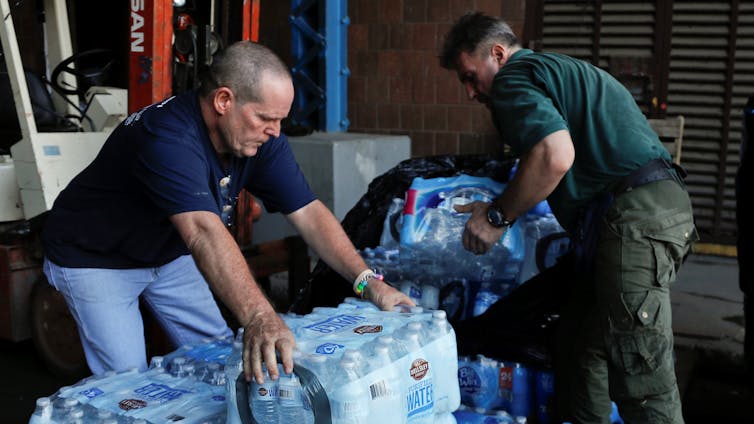
Roberto Clemente State Park employees in New York, with donated bottled water bottles bound for Puerto Rico after Hurricane Maria. AP Photo/Julie Jacobson
Julia Brooks, Harvard University
Some companies and community groups didn’t wait for Hurricane Florence to make landfall before organizing donation drives.
But as a researcher with the Harvard Humanitarian Initiative, an interdisciplinary center at Harvard University dedicated to relieving human suffering in wartime and disasters by analyzing and improving the way professionals and communities respond to emergencies, I wish they would have.
I’ve studied dozens of disasters, from Hurricane Maria and Superstorm Sandy to the South Asian tsunami and one thing is clear: In-kind donations of items such as food, clothing, toiletries and diapers are often the last thing that is needed in disaster-affected areas.
Delivering things that people need on the ground simply doesn’t help disaster-struck communities as much as giving them – and relief organizations – money to buy what they need. What’s more, truckloads of blue jeans and cases of Lunchables can actually interfere with official relief efforts.
If you want to do the greatest good, send money.

Read more: Social isolation of Older People

What’s wrong with in-kind donations

As humanitarian workers and volunteers have witnessed after disasters like Haiti’s 2010 earthquake and Southeast Asia’s Typhoon Haiyan in 2013, disaster relief efforts repeatedly provide lessons in good intentions gone wrong.
At best, in-kind donations augment official efforts and provide the locals with some additional comfort, especially when those donations come from nearby. When various levels of government failed to meet the needs of Hurricane Katrina victims, for example, community, faith-based and private sector organizations stepped in to fill many of the gaps.
How can in-kind donations cause more harm than good? Donated goods raise the cost of the response cycle: from collecting, sorting, packaging and shipping bulky items across long distances to, upon arrival, reception, sorting, warehousing and distribution.
Delivering this aid is tough in disaster areas since transportation infrastructure, such as airports, seaports, roads and bridges, are likely to be, if not damaged or incapacitated by the initial disaster, already clogged by the surge of incoming first responders, relief shipments and equipment.
This is especially the case in places like the Outer Banks, a string of barrier islands off North Carolina’s coast, where the challenges of bringing relief goods in, and distributing them to people who need supplies, are heightened by geography.

Read more: DIY method of Insulin Production in the Future

Dumping grounds

At worst, disaster zones become dumping grounds for inappropriate goods that delay actual relief efforts and harm local economies.
After the 2004 South Asian tsunami, shipping containers full of ill-suited items such as used high-heeled shoes, ski gear and expired medications poured into the affected countries. This junk clogged ports and roads, polluting already ravaged areas and diverting personnel, trucks and storage facilities from actual relief efforts.
After the 2010 earthquake in Haiti, many untrained and uninvited American volunteers bringing unnecessary goods ended up needing assistance themselves.
In-kind donations often not only fail to help those in actual need but cause congestion, tie up resources and further hurt local economies when dumped on the market, as research from the International Federation of Red Cross and Red Crescent Societies determined.
Research confirms that a significant portion of aid dispatched to disaster areas is “non-priority,” inappropriate or useless.
One study led by José Holguín-Veras, a Rensselaer Polytechnic Institute expert on humanitarian logistics, found that 50 percent to 70 percent of the goods that arrive during these emergencies should never have been sent and interfere with recovery efforts. After the 2011 Joplin, Missouri, tornado and the Tōhoku, Japan, earthquake, for example, excessive donations of clothing and blankets tied up relief personnel.
Relief workers consider these well-meaning but inconvenient donations as a “second-tier disaster” due to the disruption they cause.

What else can you do?

Instead of shipping your hand-me-downs, donate money to trusted and established organizations with extensive experience and expertise – and local ties.
Give to groups that make it clear where the money will go. Choose relief efforts that will procure supplies near the disaster area, which will help the local economy recover. You can also consult organizations like Charity Navigator that evaluate charities’ financial performance.
Many humanitarian aid organizations themselves have increasingly adopted cash-based approaches in recent years, though money remains a small share of overall humanitarian aid worldwide.
Evaluations of the effectiveness of such programs vary and are context-dependent. Nonetheless, emerging evidence suggests that disbursing cash is often the best way to help people in disaster zones get the food and shelter they need.
What’s more, the World Food Program and the U.N. High Commissioner for Refugees say that people affected by disasters tend to prefer cash over in-kind aid due to the dignity, control and flexibility it gives them.

Some exceptions

There are a few notable exceptions to this advice on avoiding in-kind donations.
If you live in or near the affected area, it is helpful to consider dropping the specific items victims are requesting at local food banks, shelters and other community organizations. Just make sure that the items won’t perish by the time they can be distributed. For areas in Hurricane Florence’s path, for instance, the Red Cross has requested blood donations.
Charity is a virtue. Particularly when disaster strikes, the urge to help is admirable. Yet this impulse should be channeled to do the greatest good. So please, if you would like to help from afar, let the professionals procure goods and services. Instead, donate money and listen to what people on the ground say they need.
And don’t stop giving after the disaster stops making headlines. A full recovery will take time and support long after the emergency responders and camera crews have moved on.
This is an updated version of an article originally published on Sept. 4, 2017.The Conversation
Julia Brooks, Researcher in international law and humanitarian response, Harvard Humanitarian Initiative (HHI), Harvard University
This article is republished from The Conversation under a Creative Commons license. Read the original article.

Is a vegetarian diet environmentally friendly?

Is a vegetarian diet really more environmentally friendly than eating meat?


Image 20170123 8093 12yfz0g.jpg?ixlib=rb 1.1
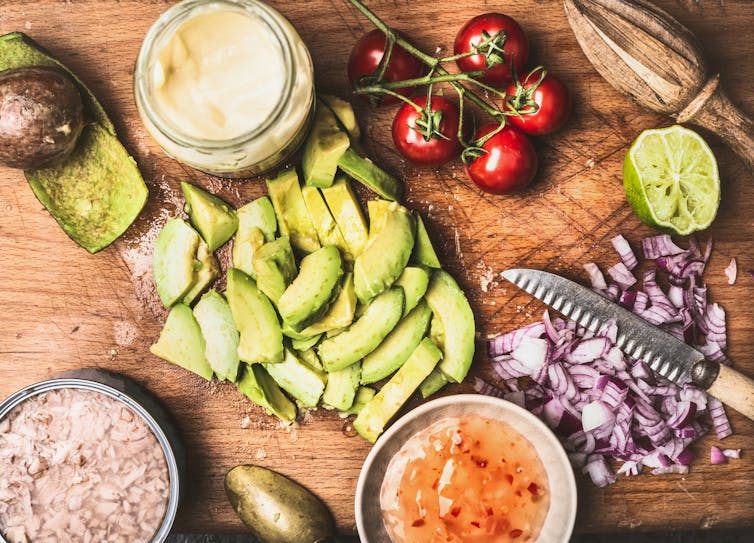
It may be meat-free but you can still think more sustainably. Shutterstock
Wayne Martindale, Sheffield Hallam University
Beef from Brazil, avocados from Mexico, lamb from New Zealand, wines from South Africa and green beans from Kenya – food shopping lists have a distinctly international flavour. And with many questioning the sustainability of importing so much food from so far away, we are beginning to ask if switching to a vegetarian diet to cut emissions caused by meat production is as sustainable as one might think.
The influence of the global trade of food on local diets and cultural choices has exploded over recent years. Food supply chains operate globally and deliver rural produce to nearly 4 billion people now living in cities and towns. It was this principle that established the world’s first agricultural research station some 150 years ago when the founders of Rothamsted saw the potential of the agricultural land surrounding London to supply a growing urban population. In the 21st century, the whole world can be your bread basket.
Many are conscious of what they eat – both from a health and environmental perspective. But what is the impact of this? We’re increasingly encouraged to eat less meat to tackle climate change. And meat consumption, in the European Union at least, has reduced and stabilised at around 42m tonnes over the last 15 years. There are also now new labels for different types of meat eaters: flexitarians (only eat meat sometimes) or the reducetarian (aim to eat less meat) that reflect the ways different groups are trying to cut down.

Just one of the new labels for meat eaters. Shutterstock

But what about all those fruit, vegetable and staples crossing the globe – can we really label them as more sustainable than eating meat? The growth of ethical food purchases now make up close to 10% of grocery purchases in the UK, which is double that of tobacco. But in addition to the impact of air miles, global land and resource use determine the sustainability of the food we eat – food production can destroy or displace natural resources in order to supply growing demand. Changing land use to expand avocado production in Mexico, for example, is displacing the rainforest. Or the devastating impact of non-certificated palm oil, used in food but also a whole host of other products. And then there is the issue of food wastage.

Measuring the sustainability of food

However, the first thing we need to be able to do is measure the environmental impact of the food we eat. We can do this for different food supply chains using carbon footprinting methods. The difficulty is that consumers choose foods based on what they like – and this frequently changes but rarely considers the impact of climate change.
From this we can say that a vegetarian diet does deliver a decreased carbon footprint. But it also shows us that food miles and global distribution can be the least of our problems. This is because food wastage can be up to 20% of food purchases and food losses across the supply chain can be far greater than this. Food waste in turn increases the carbon footprint which counters the positive gains. And perishable fresh fruit and vegetables are more likely to be thrown away than fresh meat and fish.

So is vegetarian really best?

Ultimately, we cannot say that eating a vegan or vegetarian or meat diet is any better for the environment. This is because all can be appropriate if production systems are sustainable, there is no waste and positive health outcomes are achieved. There are clearly trade-offs in choosing foods. Air freighting of green beans from Kenya into the UK was seen as unsustainable because of air miles but it also supports up to 1.5m people and livelihoods in some of the poorest regions of Sub-Saharan Africa.

Not all about meat. Shutterstock

It’s not just meat that increase greenhouse gases. Rice – produced on 163m hectares, around 12% of the global arable area – has one of the greatest plant carbon footprints because it produces a lot of methane. But a fall in production of rice is not only unlikely, it could also disrupt greenhouse gases held in the soil. But there are different ways to do things – draining off paddies at particular times in the growing season, for example. Or using different fertilisers or rice varieties that are less susceptible to the heat.

The best way forward?

Consumers need to understand trade-offs and to keep up to date on information of what is best to buy. It is important to spot food trends, for example, and project any sustainability impacts. The number of gluten-free products available is doubling year-on-year in Europe and the US. This has resulted in an increase in the consumption of plant proteins from beans and lentils. These kinds of foods are arguably more eco-friendly than meat but – whatever your thoughts about gluten-free eating – it will change how protein crops are distributed globally and may divert pulses or increase the price of them for countries such as India that depend of non-livestock proteins.
Sustainability certifications have changed how we shop, giving us guidance on ethical purchases including sustainable fishing, rainforest produce and so on. This is one way to make sure that what you eat is less damaging and/or helps sustain livelihoods and good agricultural practices.
But it is day-to-day food waste – both at home and in supply chains – that can make any diet unsustainable whether you choose to be vegan, vegetarian, a meat eater or a combination of these. Different preservation formats can reduce food waste to zero. In the case of frozen food we know food waste can be halved compared with fresh foods – less of it is thrown away. Despite what you might think, frozen compares well to fresh and can be just as nutritious.
We all choose foods based on what we like, what we can access and what we can afford. But continued surveillance and interest in sustainable production will mean we can buy produce we know has a better supply chain. There isn’t currently a certification that shows food produced with less waste (there should be), but we can aim to cut down our own and keep up with suppliers who show better commitments.
We might have an avocado – but maybe not five in a week. And of course we can source more food locally and seasonally as well as considering preserved options if we want to cut down on air miles. Like eating less meat, there are ways to make your footprint better.The Conversation
Wayne Martindale, Senior Research Fellow, Corporate Social Responsibility, Sheffield Hallam University
This article is republished from The Conversation under a Creative Commons license. Read the original article.

Cryptocurrency entrepreneurs in Puerto Rico, but will it help the locals?

Bitcoin rich kids in Puerto Rico: crypto utopia or crypto-colonialism?


File 20180214 174997 1p7pcv0.jpg?ixlib=rb 1.1
Shutterstock
Larisa Yarovaya, Anglia Ruskin University and Brian Lucey, Trinity College Dublin
Cryptocurrency entrepreneurs have moved to Puerto Rico to build a crypto utopia – initially dubbed Puertopia but now named Sol – where they plan to pay little in taxes.
The crypto expats also hope to demonstrate how the city of the future will look with blockchain methods used for most transactions alongside the development of a new digital cryptocurrency.
But it’s less clear about whose future – the few or the many – will be the driving force for change on the US territory.
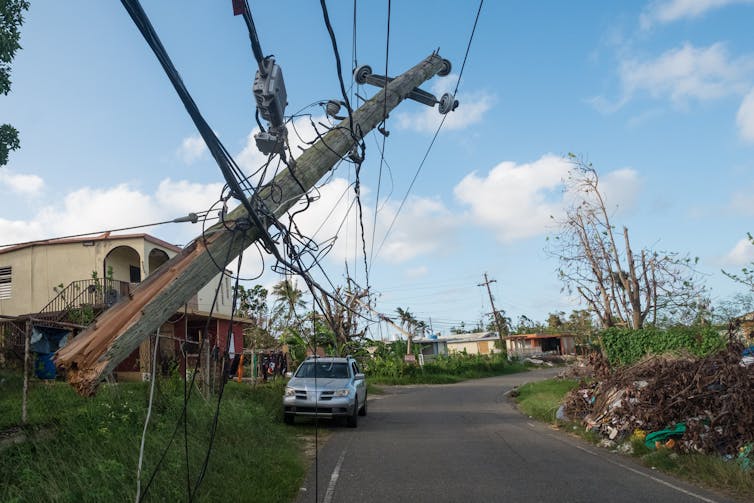
Puerto Rico was devastated by last year’s Hurricane Maria and, with inadequate aid from the US, it desperately needs investment to rebuild the island’s infrastructure. Puerto Rico was already facing severe financial difficulty before the calamity. It goes some way to explaining why local authorities are cautiously welcoming the arrival of cryptocurrency entrepreneurs on the island. But at what cost?
The term crypto-colonialism isn’t new. It was coined 18 years ago by Michael Herzfeld, but had nothing to do with cryptocurrencies – the bitcoin network didn’t come into existence until 2009.
Crypto-colonialism originally referred to countries, such as Greece and Thailand, seeking to acquire political independence at the expense of massive economic dependence. And it used the original meaning of the word “crypto” – concealed, hidden or secret. Such countries are nominally independent, but their national culture is refashioned to suit foreign models. The term colonialism in this sense is not overt at the point of a gun, but covert through the subversion of norms and cultures.
Notably, this definition of crypto-colonialism remains applicable to the socioeconomic consequences of crypto utopia.

Crypto land

There is a deep link between libertarianism and the cryptocurrency movement. Cryptocurrencies such as bitcoin rely on a decentralised, extralegal and unregulated approach. But while the crypto billionaires will enjoy their Caribbean playground, poorer locals with little knowledge of the technology will be excluded.
The mostly male entrepreneurs, who moved to Puerto Rico last year and plan to do more than create a cryptocurrency bank, will perhaps bring crypto libertarian ideas to the island. Their vision is similar to another would-be crypto utopia, the Free Republic of Liberland, which claims to be a “micronation” camped on the western bank of the Danube river. It uses bitcoin as its “national” currency.
Back on Sol, the wealthy crypto expats want to use the blockchain system for decentralised elections and even to issue citizenship ID. But we doubt that locals who are fighting poverty will be enthused by these ideas.
This behaviour reeks of disaster capitalism – the use of a natural or economic crisis to reshape and mould a society into one which entrenches a libertarian, hypercapitalistic worldview. When you are without power for months and feel ignored, any offer of help can seem a good lifeline with little thought for the consequences.

Fight the power

Crypto utopias can also cause severe environmental damage. Puerto Rico remains in a deep power crisis after Hurricane Maria, making the idea of Sol simply impractical. One bitcoin transaction consumes 215 kilowatt-hours (KWh), enough power to supply dozens of households on the island when the grid was at full capacity.
The annual electricity consumption for mining bitcoin increased from 9.5 terawatt-hours (TWh) per year to 48 TWh in the last 12 months – 2.5 times higher than Puerto Rico’s total consumption of 19 TWh. Resources and infrastructure, post-Hurricane Maria, are too stretched to support cryptocurrency mining on the island.
Crypto rich kids made their fortune on the rapid growth of cryptocurrency markets – which are problematic due to their idiosyncratic risks. It’s a game for wealthy people who can cash out early and lock in gains, having been the developers of the bubbly product. This is characteristic of any bubble – those who get in early do well, those who cash in late do poorly.


Five months after Hurricane Maria devastated Puerto Rico, 400,000 people are still living without power. Shutterstock

Our recent research shows that cryptocurrency prices are relatively isolated from the shocks transmitted from other assets, such as gold and equities. But cryptocurrency prices are deeply interlinked with each other, so a fall in the price of bitcoin affects other virtual currencies.
If bitcoin can ride out its latest price fall, then it’s likely that crypto-colonialism will slowly spread around the globe. Crypto libertarians – if they follow the Sol model – could focus on those parts of the world that have been ravaged by earthquakes, tsunamis, hurricanes and economic crises.
But cryptocurrency has also become a panacea for economic recovery. In December, Venezuela announced a creation of a new cryptocurrency – dubbed “petro” – backed up by Venezuelan reserves of precious metals, oil and diamonds. It hopes to use this cryptocurrency to fight US sanctions, high inflation and low oil prices.
However, bitcoin solutions for developing countries – previously known as neo-colonialism – shouldn’t be seen as the ultimate solution for disaster and crisis management. In the transition period, when the potential of cryptocurrencies and applications of blockchain are unexplored, we have to be sceptical of such initiatives as Sol.The Conversation
Larisa Yarovaya, Lecturer in Accounting and Finance, Anglia Ruskin University and Brian Lucey, Professor of International Finance and Commodities, Trinity College Dublin
This article is republished from The Conversation under a Creative Commons license. Read the original article.

Bitcoin’s history

A history of Bitcoin – told through the five different groups who bought it


File 20180828 86150 1dk7i9m.jpg?ixlib=rb 1.1
GeniusKp/Shutterstock.com
Dave Elder-Vass, Loughborough University
The recent fluctuations in Bitcoin’s value are just the latest in a series of spectacular peaks and troughs since it was created in 2009. (Though its price has been falling recently, it remains five times higher than last April, before the latest major peak began.)
Commentators are often dismissive of Bitcoin buyers, writing them off as naive victims of a fraudulent bubble. But if we look more carefully, we can trace the history of Bitcoin through five key narratives. Each has drawn in a different group of buyers and in doing so contributed to its long-term growth in value.

The idealists

Bitcoin arose from a tiny group of cryptographers who were trying to solve the “double spend” problem facing digital money: “cash” held as a digital file could easily be copied and then used multiple times. The problem is easily solved by financial institutions, who use a secure central ledger to record how much everyone has in their accounts, but the cryptographers wanted a solution that was more akin to physical cash: private, untraceable, and independent of third parties like the banks.
Satoshi Nakamoto’s solution was the Bitcoin blockchain, a cryptographically secured public ledger that records transactions anonymously and is kept as multiple copies on many different users’ computers. The first narrative of Bitcoin’s value was built into Nakamoto’s original “white paper”. This claimed that Bitcoin would be superior to existing forms of electronic money such as credit cards, providing benefits like eliminating chargebacks to merchants and reducing transaction fees.


The libertarians

But from an early stage, Nakamoto also marketed Bitcoin to a libertarian audience. He did so by stressing the absence of any central authority and particularly Bitcoin’s independence from both states and existing financial institutions.
Nakamoto criticised central banks for debasing money by issuing increasing amounts of it and designed Bitcoin to have a hard limit on the amount that could be issued. And he stressed the anonymity of Bitcoin transactions: safe, more or less, from the prying eyes of the state. Libertarians became enthusiastic advocates and buyers of Bitcoin, more as an act of rebellion than for financial reasons. They have remained highly influential in the Bitcoin community.

The savvy young

These, however, were small constituencies, and Bitcoin really started to take off in July 2010 when a short article on Slashdot.org (“news for nerds”) spread the word to many young and technically savvy buyers. This community was influenced by the “Californian ideology” – belief in the capacity of technology and entrepreneurs to transform the world.
Many bought small quantities at a low price and were somewhat bemused to find themselves sitting on significant investments when the price multiplied. They became used to huge fluctuations in the price and frequently advocated “hodling” Bitcoin (a mis-spelling of “hold”, first used in a now iconic message posted by an inebriated user determined to resist constant “sell” messages from day traders). The hodlers insisted, half seriously, that Bitcoin was going “to the moon!” (used 178,000 times on the bitcointalk forums), and talked of buying “lambos” (lamborghinis) with their gains. This countercultural levity generated a sense of community and a commitment to holding Bitcoin that helps to sustain its value.

The investors

The last two groups that have contributed to Bitcoin’s history are more conventional. What I consider the fourth group of investors consists of speculators who have been attracted by the volatility and peaks in Bitcoin prices.
On the one hand, we have the day traders, who hope to exploit the volatility of Bitcoin’s price by buying and selling quickly to take advantage of short-term price movements. Like speculators in any other asset, they have no real interest in the larger picture or of questions of inherent value, but only in the price today. Their only narratives are “buy” and “sell”, often employed in an attempt to influence the market.
On the other hand, we have those who are drawn in by news of price bubbles. Ironically, bubble narratives in the press, often designed to deter investors, can have the opposite effect. These investors join what Keynes called a “beauty contest” – they only care what other people might be prepared to pay for a Bitcoin in the short to medium term future.

The portfolio balancers

The final and newest group of Bitcoin buyers are the portfolio balancers: more sophisticated investors who buy Bitcoin to hedge against wider risks in the financial system. According to modern portfolio theory, investors can reduce the riskiness of their portfolios overall by buying some Bitcoin because its peaks and troughs don’t line up with those of other assets, providing some insurance against stock market crashes. This is an emerging group, but one that could significantly raise Bitcoin’s acceptability among mainstream investors.
Bitcoin’s value, then, has been built on an evolving series of narratives which have drawn in successive waves of buyers. While mainstream commentators are often dismissive of Bitcoin as lacking inherent value, all asset market values depend on narrative processes like these.
Bitcoin may well collapse again, but so may any other financial asset. Investing in Bitcoin is neither more nor less risky than investing in the latest technology company launched on the stock market without ever having made a profit.The Conversation
Dave Elder-Vass, Reader in Sociology, Loughborough University
This article is republished from The Conversation under a Creative Commons license. Read the original article.

Child abuse begins with a touch

Child Abuse and You:


A child abuse begins with a touch, normally by a third person. Let us not delve too deep into who the third person could be. Any body other than the parent is a third person. There is no gender or age bias in those who indulge in such perverse act. Studies have shown that 90% of people are sexually harassing children.

A child will reveal any abuse by her action, behavior or words. Parent Protect has given a list of signs to watch out for which could be warning signs in children. A combination of worrying signs could be the time to investigate possible abuse. But, about 75 percent of children do not tell anyone due to fear or threat.

It is no secret that children listen to their parents more than others. So, the first step is teaching them from a very young age the nuances of touch and inappropriate caressing so that they get to know the difference between Good Touch and Bad Touch. 

Developing children in a safe environment, to understand what is good and what is bad is the most important in today's time. Only children of parents who are ignorant of this are victims of sexual abuse.

Your daughter may be subjected to sexual harassment. If you ignore it, it means that you are not a responsible mother or father. If your daughter says in her inimitable style that she doesn't like somebody, give her a patient hearing, investigate immediately and protect her from that person.

If your child is not her self any more, looking glum and silent, not playing or studying as before, be warned. This may be the early sign or warning for you to take a deeper insight into the matter or seek advice.

Do not wait for your child to grow up. Make them understand the nuances of good and bad touch at the earliest. may be from the age of 3.


Facebook has introduced a user trustworthiness score

 – here's why it should go further


File 20180828 76006 1b7t5yi.jpg?ixlib=rb 1.1
Facebook wants to improve trust. Shutterstock
Sharon Coen, University of Salford
Facebook has reportedly started giving users a secret trustworthiness score in its attempt to tackle fake news. According to the Washington Post, the score is partly based on users’ ability to correctly flag and report inaccurate news items on the site. Facebook then takes this score into account when working out how a user’s content should be spread around the network (although it doesn’t tell users what their score is).
Why has Facebook started doing this? Following events such as the supposed role of misinformation on social media during the 2016 US election via and the Brexit campaign, Facebook has been increasingly under pressure to curb the spread of fake news. But the platform is now facing the possibility that the growing awareness of misleading and false information has increased the likelihood that users will report articles as “fake” just because they don’t agree with them.
We can use psychology to explain why this might be happening. And it suggests that the trustworthiness score is a good idea. But I would argue that Facebook should go further and give each user a more comprehensive personal reputation score that they can view to determine the quality and reach of their content.
In psychology, we call the tendency to seek confirmation, and minimise or discard information challenging our own beliefs “confirmation bias”. Research on people in the US and Germany has shown (in line with other studies) that people tend to spend more time reading news consistent with their existing attitudes than stories that highlight a different position. The same study also shows reading news that supports your views strengthens them, while reading stories that show a discrepancy with your attitudes weakens them.
In general, people don’t like to face situations in which their beliefs are challenged. This gives rise to the uncomfortable feeling of cognitive dissonance, the sense of holding two conflicting positions at once. To prevent this, people go to great lengths to prove their original beliefs are right. When exposed to facts that contradict our views, our choice is to either reconsider our position or to challenge the new information. And attacking the credibility of the information or its source can often do the trick.


Only Facebook can currently see user scores. Shutterstock

For example, research by colleagues and me has shown how people who deny the existence of – or the necessity to act upon – climate change go to great lengths to deny the value of the arguments presented. These strategies include denying and disputing the scientific evidence but also arguing that the scientists who produce it, and those trying to address the issue, are dishonest and have ulterior motives.
So it’s not surprising that the extensive media coverage of the issue of fake news (which research suggests was actually exaggerated in relation to the 2016 US election) might have encouraged Facebook users to flag as fake articles that make uncomfortable reading. And this creates a problem.
The idea of a secret trustworthiness score being used mysteriously by Facebook might put people off flagging content. But a publicly available score might be seen as a way to punish people who flagged content “incorrectly” by publicly shaming them. An alternative would be to allow users to see their own personal reputation scores based on what they share as well as what they flag, but not make them available publicly.

Using scores to change our behaviour

While we do have biases in our thinking, most of us want to feel useful and valuable. Studies have now shown how people use social media as a kind of identity laboratory, constructing a particular image of themselves that they present to the world. Our own research shows how Facebook use is associated with our need to feel like we belong to a community and that we are worthy and capable individuals. In a way, introducing reputation scores that users can access would satisfy this need, while also making sure that people do not feel discouraged from flagging content for fear of being profiled and singled out by the platform.
We already know how important authenticity and trust are online. People rely on online reputation scores to decide where to go, what to buy and what to do online. So a personal reputation score based on the quality and reliability of the sources of information we share online (and not only on the content we flag as fake) could be a useful tool for helping us spot actual fake news. Giving feedback on the accuracy of shared or flagged content could help us realise what we can trust and what we should flag, regardless of our wider opinions.
The challenge, of course, would be to figure out how to calculate this reputation score. But given how much data Facebook collects on its users, and on the content shared, perhaps this wouldn’t be too difficult.The Conversation
Sharon Coen, Senior Lecturer in Media Psychology, University of Salford
This article was originally published on The Conversation. Read the original article.